
Baby Development Myths: What Science Really Says About Your Baby’s First Year
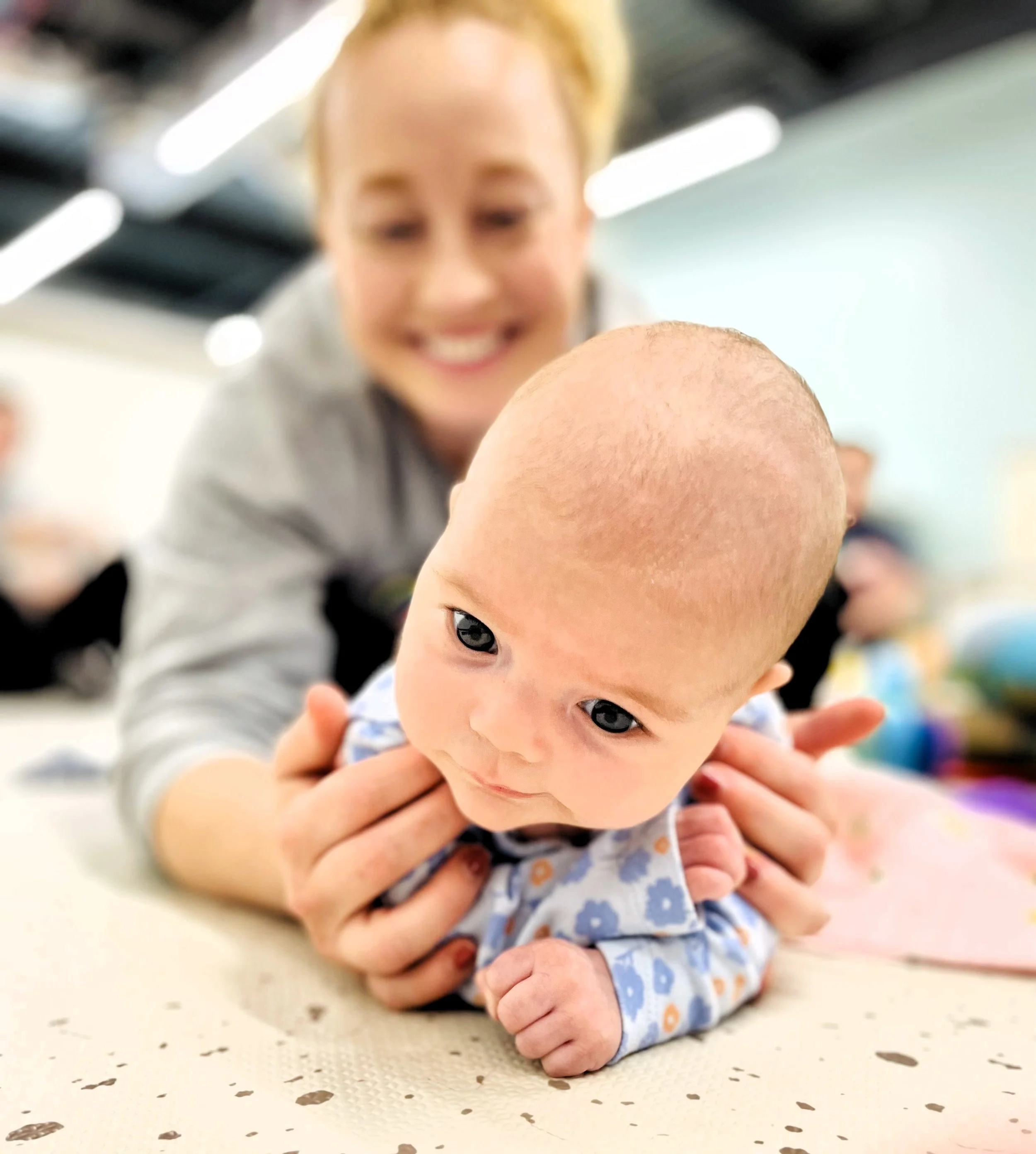

As parents, we’re bombarded with advice about our babies’ development from well-meaning family members, friends, social media, and even strangers in the grocery store. With so many conflicting opinions, how do you separate fact from fiction?
As an occupational therapist specializing in infant development, I’ve heard countless myths that not only create unnecessary worry for parents but sometimes lead to practices that aren’t ideal for babies. Today, I’m setting the record straight on some of the most common misconceptions about baby development during that crucial first year.
Myth 1: “All Babies Develop at the Same Pace”
The Reality: Development follows a sequence, but timing varies significantly.
While development generally follows a predictable pattern (head control before sitting, sitting before standing), the timing can vary dramatically from baby to baby—even within the same family!
Some babies sit independently at 5 months, while others take until 8 months. Some walk at 9 months, others at 15 months. Both scenarios can be completely normal.
What Parents Should Know:
Focus on the sequence of skills rather than specific ages
Consider your baby’s unique temperament, body type, and interests
Watch for steady progress rather than comparing to other babies
Red Flags to Watch For:
Regression (losing skills previously mastered)
Significant delays across multiple areas of development
Strong asymmetry (always favoring one side of the body)
Little or no progress over extended periods
One mom in our practice shared: “I was panicking because my neighbor’s baby was crawling at 6 months while my 9-month-old showed zero interest. Our therapist helped me see how my daughter was developing strong sitting and fine motor skills instead—taking her own unique path. She eventually crawled at 10 months and was walking just a few weeks later.”
Myth 2: “Earlier Walking Means Advanced Development”
The Reality: Earlier isn’t necessarily better when it comes to motor milestones.
Many parents take pride when their baby reaches milestones “early,” particularly walking. However, research shows that early walking doesn’t predict future athletic ability or intelligence. In fact, babies who spend more time crawling often develop stronger foundations for spatial awareness and coordination.
What Science Shows:
Babies who spend substantial time crawling develop important neural connections between brain hemispheres
Each developmental stage builds specific skills that support later abilities
Some early walkers skip important developmental steps that may need to be addressed later
The Balanced View:
Neither early nor late milestone achievement within the normal range predicts future outcomes. What matters most is that babies have opportunities to develop a wide variety of movement skills.
Myth 3: “Baby Walkers Help Development”
The Reality: Baby walkers can actually delay motor development and pose safety risks.
Despite their popularity and seemingly logical name, baby walkers have been shown to:
Delay independent walking
Reduce the quality of movement patterns
Decrease core strength development
Create safety hazards (the American Academy of Pediatrics calls for a ban on mobile walkers due to injury risks)
What to Use Instead:
Push toys (once baby can pull to stand)
Activity tables that encourage standing
Safe climbing opportunities with supervision
Simple floor space for unrestricted movement
Developmental Insight: “Babies need to feel their full body weight through their legs and experience balance challenges to develop the muscle strength and coordination needed for walking. Walkers prevent these natural learning opportunities.” —Nicole Ecker, OTR/L
Myth 4: “Babies Need Expensive Toys for Proper Development”
The Reality: Simple household items often provide the best developmental opportunities.
The toy industry markets countless products as “developmental,” but babies often learn best from everyday objects and simple interactions.
Household Items That Support Development:
Measuring cups and containers (nesting, stacking, filling, emptying)
Cardboard boxes (crawling through, hiding objects)
Kitchen utensils like whisks and spatulas (grasping, exploring textures)
Scarves or fabric scraps (sensory play, peek-a-boo)
Couch cushions (climbing, crawling over)
What Truly Matters for Development:
Face-to-face interaction with caring adults
Freedom to move and explore safely
Exposure to language and conversation
Varied sensory experiences
Responsive caregiving that follows baby’s lead
As one father in our practice wisely noted: “My son’s favorite ‘toy’ for months was an empty wipes container with scarves pulled through the opening. He learned cause and effect, developed his grasp, and worked on problem-solving—all with something I nearly threw away.”
Myth 5: “If My Baby Misses a Milestone, They’ll Catch Up on Their Own”
The Reality: Sometimes they will, but sometimes they need support.
While minor variations in development often resolve naturally, persistent challenges may benefit from early intervention.
When to Watch and Wait:
Your baby shows steady progress, just at a slower pace
Your baby is meeting milestones in some areas while being slightly delayed in others
Your baby is showing consistent effort and interest in developing new skills
When to Seek Support:
Your baby shows significant delays across multiple areas
Your baby displays unusual movement patterns or strong asymmetry
Your baby seems frustrated by their inability to master skills
Your baby has known risk factors (premature birth, extended NICU stay, etc.)
The Power of Early Intervention:
Research consistently shows that addressing developmental concerns early is:
More effective than waiting
Less intensive than later intervention
More likely to prevent secondary challenges
Often simple and play-based
One parent shared: “We were told to ‘just wait’ when our daughter wasn’t sitting at 9 months. Following our instincts, we sought an evaluation. The therapist identified low muscle tone that wasn’t obvious to us and gave us simple daily activities. Within weeks, we saw improvement, and now she’s caught up completely. Those few early intervention sessions made all the difference.”
Myth 6: “More Tummy Time is Always Better”
The Reality: Quality matters more than quantity, and babies need a variety of positions.
While tummy time is crucial for development, forcing long sessions can create negative associations. Additionally, babies need experience in multiple positions for balanced development.
The Balanced Approach:
Short, frequent tummy time sessions (starting with 1-2 minutes several times daily)
Variety of positions throughout the day (back, tummy, side-lying, held upright)
Following baby’s cues for engagement and fatigue
Making tummy time playful rather than a “workout”
Position Variety Benefits:
Side-lying: Promotes midline awareness and hand-to-hand play
Supported sitting: Develops different core muscles than tummy time
Held upright: Provides vestibular stimulation and different visual perspectives
Myth 7: “Babies Should Sleep Flat on Their Backs All Day”
The Reality: “Back to sleep, tummy to play” is the complete guideline.
The “Back to Sleep” campaign dramatically reduced SIDS rates—a vital public health success. However, some parents misinterpreted this to mean babies should be on their backs all day.
The Complete Picture:
Babies should indeed sleep on their backs for safety
During awake time, supervised tummy time and position variety are essential
Extended time in car seats, swings, and other containers should be limited
Impact of Limited Position Variety:
Potential for positional plagiocephaly (flat spots on the head)
Delayed core strength development
Reduced opportunity for visual and vestibular development
Potential for increased sensory sensitivities
Evidence-Based Developmental Expectations
Instead of rigid milestone timelines, consider these evidence-based ranges for common first-year skills:
Head Control: 1-4 months
Rolling: 3-7 months
Independent Sitting: 5-8 months
Crawling: 7-11 months (some babies use alternative movement methods)
Pulling to Stand: 8-12 months
Walking: 9-18 months
Remember: These are ranges, not deadlines. A baby developing skills at either end of these ranges can be completely typical.
Supporting Your Baby’s Natural Development
The best way to support your baby’s development isn’t through achievement pressure or comparison, but through:
Following their lead: Notice what interests and motivates them
Providing opportunities: Create an environment that allows for safe exploration
Limiting restrictions: Minimize time in containers that restrict movement
Playing together: Engage in responsive, back-and-forth interaction
Trusting your instincts: You know your baby best; seek support if something concerns you
When Developmental Support Can Help
If you’re concerned about your baby’s development, trust your instincts. Early intervention is:
Often play-based and parent-coached
Typically short-term for mild concerns
Covered by insurance or early intervention programs in many areas
Most effective when started early
Occupational therapy for babies focuses on empowering parents with specific strategies tailored to their baby’s unique developmental profile—turning everyday interactions into growth opportunities.