
The Crawling Connection: How This Milestone Shapes Your Baby’s Brain
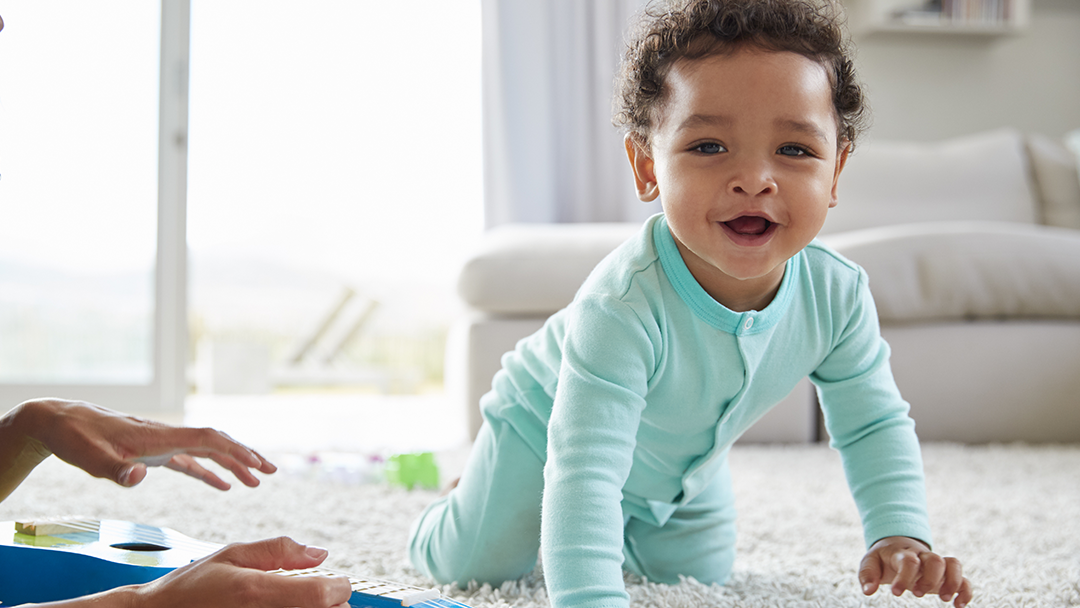
Have you noticed some babies seem to skip crawling altogether, going straight from sitting to standing? Or perhaps your little one is showing no interest in crawling despite being able to sit independently for weeks. As parents frequently ask me in my practice: “Does crawling really matter?”
The answer might surprise you. Crawling isn’t just another checkbox on the developmental timeline—it’s a powerful brain-building activity that creates neural connections your baby will use for years to come. Let’s explore why this four-limbed movement matters so much and what you can do if your baby seems to be taking an alternative path.
The Brain-Building Power of Crawling
When your baby propels themselves forward on hands and knees, they’re doing far more than just getting from point A to point B:
Cross-Hemispheric Integration
Crawling is one of the first movements that requires both sides of the brain to work together. This coordination creates vital neural pathways between the left and right hemispheres—connections that later support:
Reading (tracking from left to right)
Writing (coordinating thinking and hand movements)
Mathematical reasoning (using both logical and spatial thinking)
Athletic coordination (fluid cross-body movements)
Spatial Awareness Development
As babies navigate their environment on all fours, they develop an understanding of:
Their body’s position in space
Distance and depth perception
Navigational concepts (over, under, around, through)
Object permanence (understanding things exist even when out of sight)
One mom in our practice shared: “After learning about crawling’s importance, I watched my daughter with new appreciation. She wasn’t just moving—she was solving spatial puzzles with every movement, figuring out how to get around furniture and reach her toys.”
Visual Processing Enhancement
Crawling requires babies to:
Focus on objects at varying distances
Track moving objects while also moving themselves
Coordinate what they see with how they move
These skills later translate to reading, catching a ball, and even driving a car.
When Do Babies Typically Crawl?
Most babies begin crawling between 7-10 months. However, this window is flexible:
Some babies crawl as early as 6 months
Others may not crawl until closer to 12 months
Some babies use alternative movement methods (more on this below)
Remember: development isn’t a race, and the timing matters less than the skills being built.
Before They Crawl: Important Pre-Crawling Movements
Crawling doesn’t happen overnight. Look for these important preparatory movements:
1. Tummy Time Mastery
Strong neck and upper body muscles from tummy time create the foundation for crawling.
2. The Rocking Phase
Baby gets on hands and knees and rocks back and forth—a crucial muscle-strengthening movement.
3. The Army Crawl
Belly on the floor, using arms to pull forward—often the first true forward movement.
4. The “Swimming” Position
Tummy down with arms and legs extended and lifted slightly—building core strength.
5. The Tripod Sit
Sitting while supporting with one hand, freeing the other to reach—developing the weight-shifting needed for crawling.
What If My Baby Skips Crawling?
Some babies find alternative ways to get around, including:
Bottom-scooting
Rolling to move across the room
Bear-walking (on hands and feet with straight legs)
Crab-crawling (moving sideways)
The key question isn’t whether your baby crawls in the traditional hands-and-knees manner, but whether they’re getting the developmental benefits that typically come from crawling.
If your baby is using an alternative movement, they may need extra opportunities to develop the skills usually gained through crawling.
When to Be Concerned About Crawling
Consider reaching out to a developmental specialist if:
Your baby shows no interest in moving independently by 10-11 months
Your baby strongly favors one side of the body when attempting to move
Your baby was crawling but suddenly stops
Your baby shows frustration about wanting to move but seems unable to figure out how
Your baby is not bearing weight on their legs when supported in standing by 12 months
Creating a Crawling-Friendly Environment
Your home setup can either encourage or discourage crawling. Here’s how to make it crawling-friendly:
1. Provide Appropriate Flooring
Ideal surfaces include:
Low-pile carpet (provides traction without too much resistance)
Play mats with slight texture
Hardwood with a non-slip area rug
Avoid:
High-pile carpet (too difficult to navigate)
Slippery surfaces (discourages movement attempts)
2. Create Interest Zones
Position toys strategically around the room just slightly out of reach to motivate movement.
3. Minimize Container Time
Limit time in:
Bouncers
Exersaucers
Walkers
High chairs (outside of mealtimes)
These restrict the free movement needed to develop crawling skills.
4. Ensure Safe Exploration
Baby-proof thoroughly so your little one can explore safely without hearing “no” constantly.
5 Occupational Therapist-Approved Activities to Encourage Crawling
1. The Tunnel Game
Why it works: Creates a motivating environment that naturally encourages the crawling position.
How to do it: Create a tunnel using a large cardboard box, play tunnel, or even a blanket draped over chairs. Place an exciting toy at the far end, and sit at the entrance encouraging your baby to move through.
Pro tip: Start with a very short tunnel and gradually increase the length as your baby becomes more confident.
2. Follow-the-Sound Activities
Why it works: Uses auditory motivation to encourage forward movement.
How to do it: While your baby is in the crawling position, use a musical toy or sound-maker to capture their attention, then slowly move it forward just out of reach.
Developmental note: “This activity not only encourages crawling but also builds auditory tracking skills important for language development.” —Nicole Ecker, OTR/L
3. The Pillow Obstacle Course
Why it works: Provides varied terrain that builds strength and problem-solving.
How to do it: Arrange pillows, folded blankets, and cushions to create a simple obstacle course with small “hills” and “valleys” for your baby to navigate.
Safety note: Keep obstacles low and stable, and always supervise closely.
4. Toy Positioning Strategy
Why it works: Encourages weight-shifting—a critical pre-crawling skill.
How to do it: While your baby is in a hands-and-knees position, position toys slightly to the right or left, encouraging them to shift weight to one arm to reach with the other.
Parent success story: “My son would get stuck in that hands-and-knees position, rocking but never moving forward. Using the toy positioning technique, he finally figured out how to move one hand at a time.” —Carlos, father of 9-month-old Mateo
5. The Supported Crawl Technique
Why it works: Provides just enough assistance for babies who need help coordinating the movement pattern.
How to do it: With your baby in the crawling position, place your hands gently on their hips. As they move one arm forward, gently guide the opposite hip forward to help them feel the reciprocal crawling motion.
Important tip: Provide only as much support as needed, gradually reducing your assistance as your baby gains confidence.
Celebrating Alternative Movement
If your baby has chosen a different way to get around, you can still help them develop the skills typically gained through crawling:
For Bottom-Shufflers:
Encourage play in the quadruped (hands-and-knees) position
Create games that involve reaching in different directions
Provide plenty of climbing opportunities once they’re walking
For Rollers:
Create activities that require controlled rotation
Practice transitions between positions (lying to sitting, sitting to hands-and-knees)
Encourage reaching across the body during play
For Bear-Walkers:
Set up tunnels to encourage traditional crawling
Practice activities that require weight-bearing on knees
Create games that involve sitting back on heels and reaching
Your Crawling Questions, Answered
Q: My baby is 11 months and not crawling yet. Should I be worried?
A: Not necessarily. If your baby is showing interest in movement and making progress with their motor skills (reaching, sitting independently, attempting to move somehow), they may simply be taking their own developmental path. However, it’s always appropriate to discuss developmental concerns with your pediatrician.
Q: Does using a walker help with learning to crawl?
A: Actually, walkers can delay crawling development as they allow babies to move without developing the necessary core strength and coordination. They also reduce motivation to learn independent movement. The American Academy of Pediatrics recommends against using walkers.
Q: My baby crawls backward but can’t go forward. Is this normal?
A: Backward crawling is very common and often precedes forward crawling! It happens because babies typically develop arm strength before leg strength, so their arms push more effectively than their legs can. Continue encouraging their efforts—forward movement usually follows within a few weeks.
Supporting Your Baby’s Movement Journey
Remember that development isn’t about rushing to the next milestone—it’s about building strong foundations for future skills. Whether your baby is an enthusiastic crawler, taking an alternative route, or still working on getting mobile, your support and encouragement make all the difference.
Nicole Ecker is a licensed occupational therapist specializing in infant development. Through her practice, Milestones and Moments, she helps babies build strong foundations for lifelong movement, learning, and play.